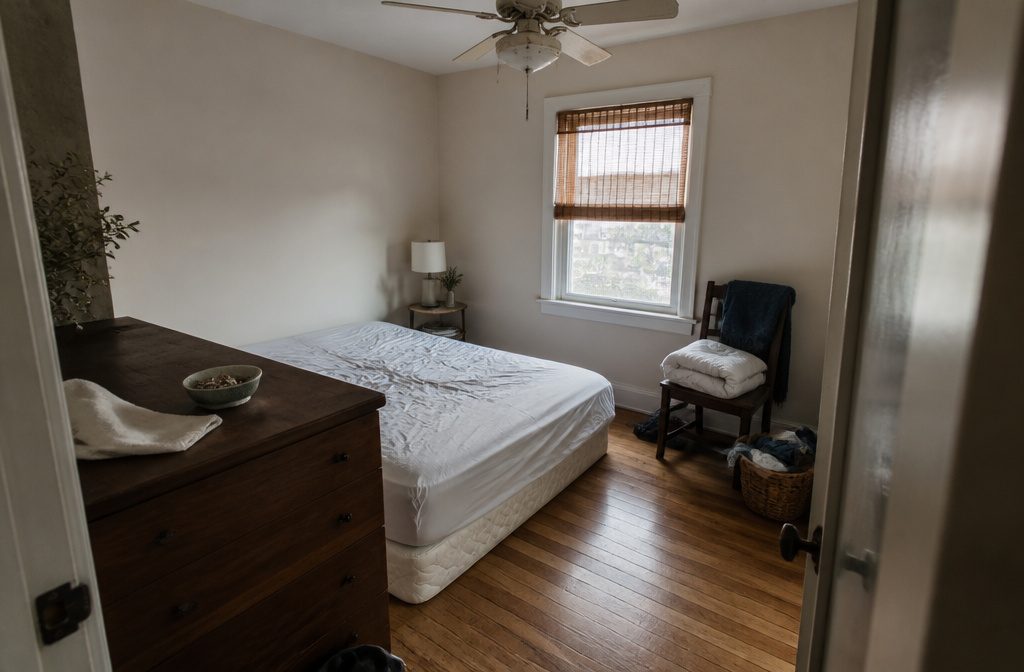
A bedroom reset takes 30 to 40 minutes if you work top to bottom without backtracking. Most people start at the wrong end—dusting furniture before clearing the ceiling fan, which drops everything they just wiped back onto the dresser.
Strip the bed first, toss anything headed for the trash or another room, then dust from the fan down to the baseboards so nothing settles twice.
1. Clear clutter, trash, and things that belong elsewhere
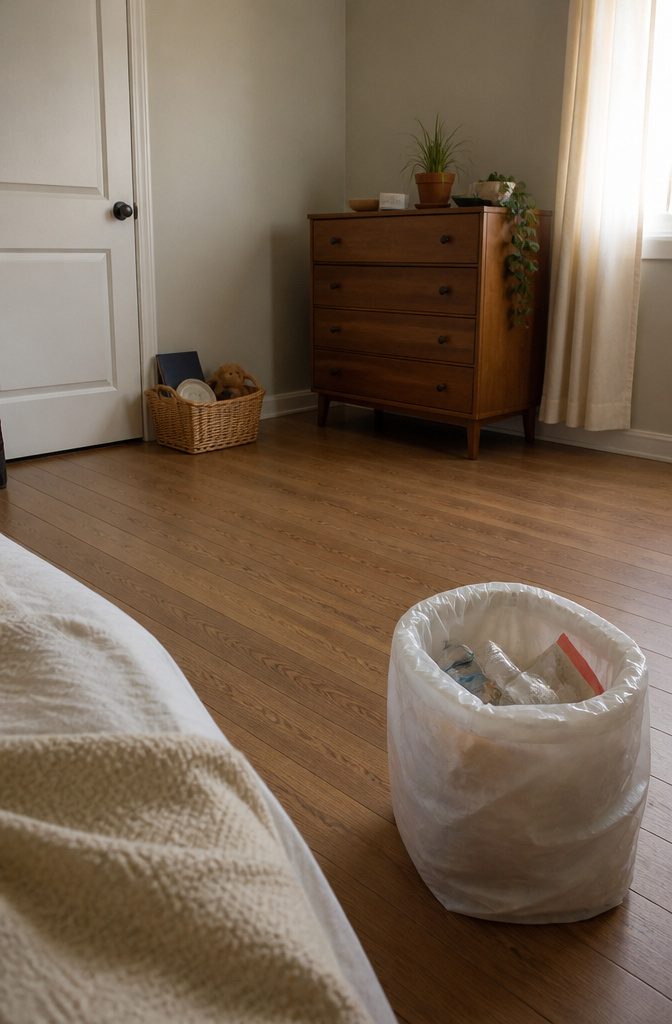
I start with what doesn’t belong. Anything that lives in another room goes into a basket or bag right away: dishes, bathroom items, books borrowed from somewhere else, toys that migrated in.
A bedroom should hold only bedroom things, and clearing that first makes every other task visible. I don’t bother putting each item back immediately; I set the basket by the door and deal with it once the room is sorted.
Trash comes next. Wrappers, packaging, food containers, empty bottles—anything destined for the bin gets tossed.
I keep a trash bag in hand and work fast. Some people recommend a 25-minute timer for this stage, which works if you’re prone to overthinking small decisions.
Once trash is out, the floor and surfaces open up, and what’s left is clothing, furniture, and items that actually belong in the room.
2. Sort laundry and strip the bed
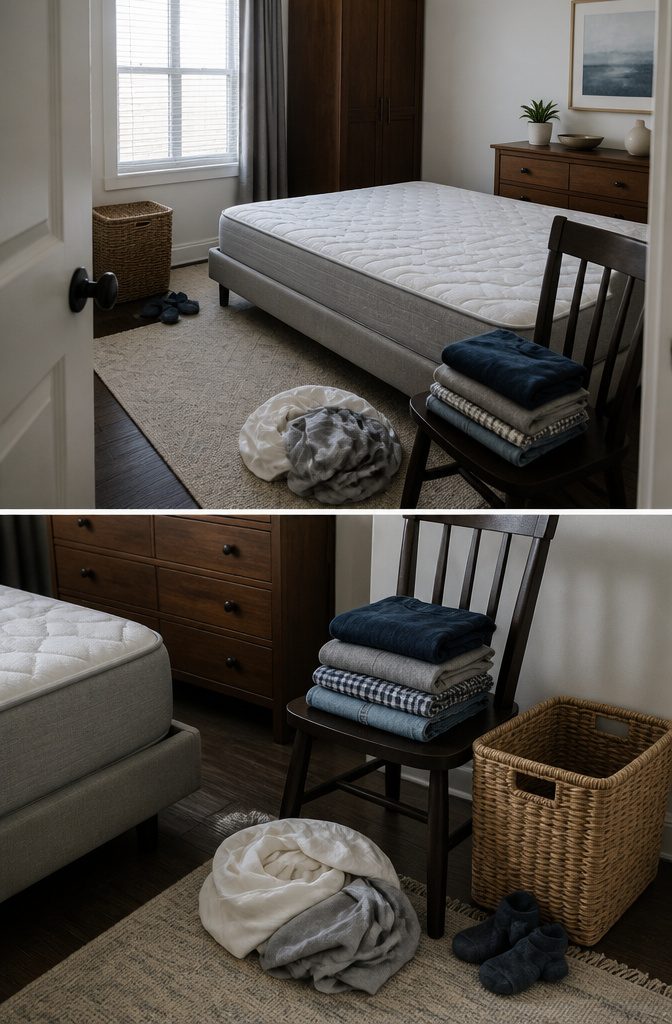
I pull everything off the floor first—clean clothes, dirty clothes, things that might be either—and make three decisions fast. Dirty items go straight to the hamper.
Clean clothes get folded or hung and put back where they belong. Anything that doesn’t live in the bedroom leaves the room.
The floor clear, I strip the bed completely: pillowcases, flat sheet, fitted sheet. All of it goes into the wash.
Sheets should be washed weekly, or at least every other week if you’re stretching it. I don’t wait until they feel dirty, because by then they’ve already collected a week’s worth of dead skin, dust, and hair.
Once the bed is stripped and the laundry sorted, the room already looks halfway done, and you can move through the rest of the steps without tripping over piles.
3. Put bedroom storage back in order
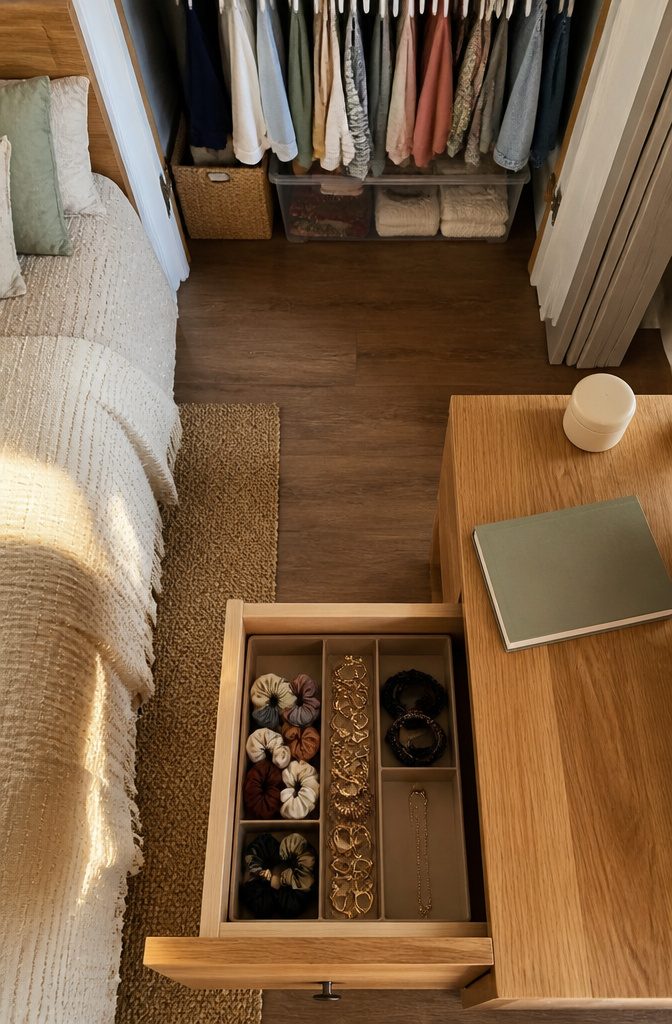
Once the bed is clear and the trash is out, pull everything from drawers, the closet, and the nightstand and group it by type.
I work through one category at a time rather than bouncing between tasks, because handling all the shirts before moving to socks keeps the momentum going.
The same principle a chef uses when peeling every potato before slicing any of them applies here: shifting focus between folding and sorting slows the whole job down.
Start with clothing.
Separate clean pieces from anything headed to the hamper, then return the clean items to their sections in the closet or drawers. Under-bed storage gets the same treatment.
Pull everything out, group the largest items first, and pack them back in with the most-used pieces within easy reach. If your nightstand has a drawer, an expandable utensil organizer keeps smaller items from rolling loose.
Limit the nightstand surface to one or two titles you’re actively reading.
Jewelry, hair ties, and loose trinkets get corralled into small containers or moved entirely. Less on top means less to dust, and the space reads cleaner the moment you walk in.
4. Dust furniture and fixtures from top down
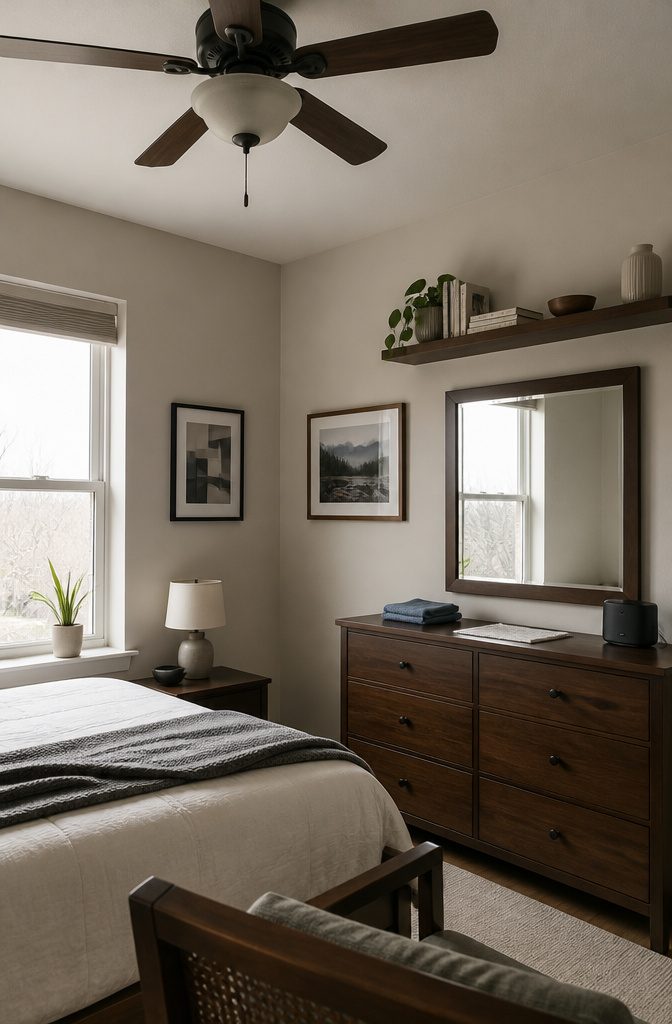
I start dusting at the ceiling fan or light fixture and work down from there, because anything I knock loose will settle on the surfaces below.
If I start at the dresser and then move up to clean the fan blades, I’ve just undone the first ten minutes.
The pattern is top to bottom and left to right across the room, which keeps me from dragging the microfiber cloth back over areas I already finished.
I hit the tops of door frames, picture frames, and any wall-mounted shelves first, then move to the furniture surfaces themselves. Nightstands, dressers, and windowsills collect dust fast, and mirrors show every streak if I rush the wipe-down.
For anything delicate or electronic, I use a dry cloth instead of spray, since moisture can leave marks on screens or seep into small gaps around lamp bases.
The whole pass takes about five minutes in a standard bedroom, longer if there are a lot of small objects sitting out on flat surfaces.
5. Wipe mirrors and windows
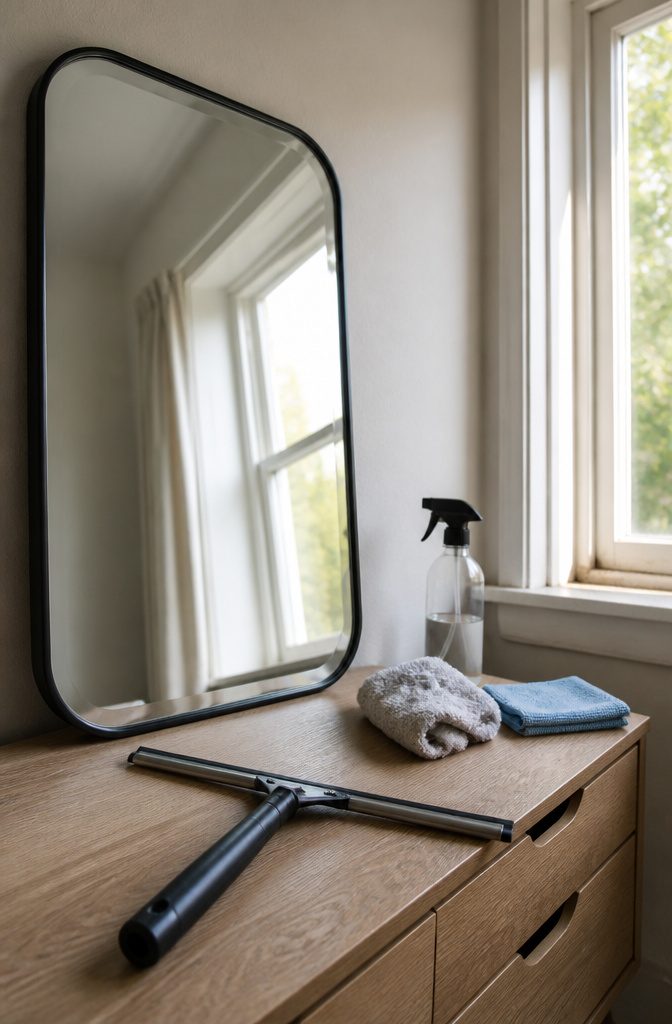
Glass and window frames collect dust and smudges fast, and the streak problem gets worse if you’re wiping with the wrong cloth or piling on too much cleaner.
I clean mirrors with a squeegee rather than towels, which skips the whole paper-towel-versus-microfiber debate and leaves the glass perfectly clear.
Spray glass cleaner on the mirror, make one horizontal swipe across the top with the squeegee, then swipe vertically from top to bottom.
Wipe the squeegee blade on damp terry cloth between passes. That gets rid of drips and leaves no smudges.
If you don’t have commercial glass cleaner, mix 45% water, 45% rubbing alcohol, and 10% ammonia in a spray bottle. Both work, but the squeegee method matters more than the formula.
Wipe down the mirror frame while you’re there.
It holds just as much dust as the glass itself, and most people skip it. Use a damp microfiber cloth on the frame, then dry terry cloth to catch any solution that settles at the base of the mirror.
6. Vacuum or mop floors, including under the bed
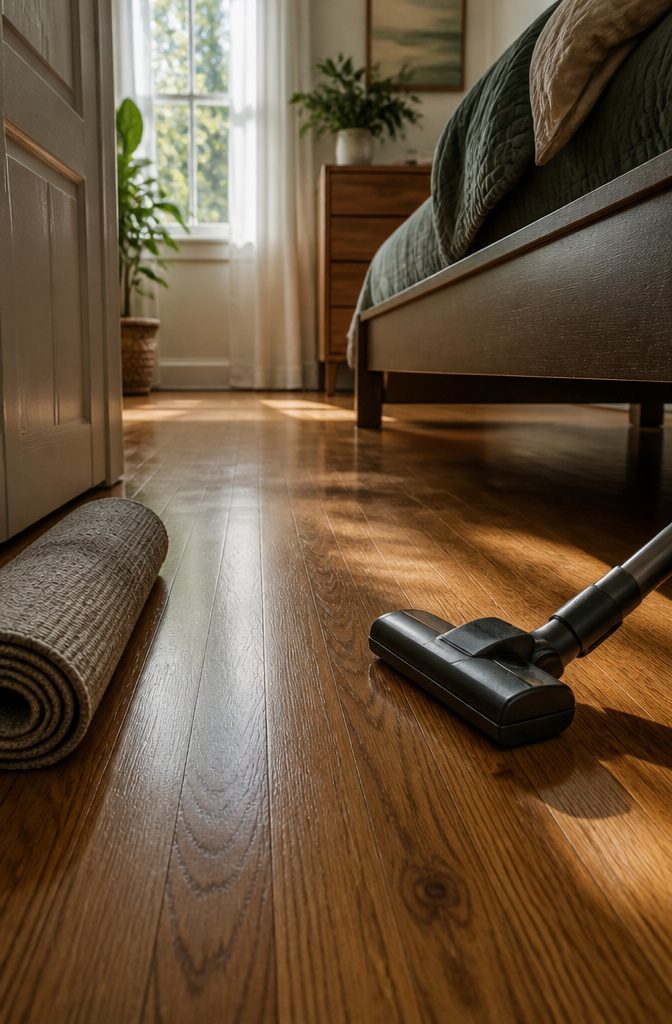
Start with the floor type you have—carpet gets vacuumed with strong suction and a brush roll, hardwood works with a vacuum on a safe setting or a microfiber duster, and tile takes a mop or a quick-clean system.
I go straight for corners and the space under the bed, because that’s where dust settles heaviest and gets ignored longest.
Pull anything stored under the bed out first so the area is completely clear, then work the vacuum or duster through.
If you have throw rugs, shake them outside before you start on the floor itself. For hardwood that needs more than dry cleaning, a mixture of ten parts water to one part vinegar handles most grime without leaving residue.
The whole pass should take ten to fifteen minutes if you keep moving and don’t stop to reorganize furniture.
7. Make the bed and reset the room

Making the bed is the final move, and the impact is instant.
Straighten the covers, fluff the pillows, and tuck in what needs tucking—the whole room reads cleaner the moment the bed looks intentional. If you stripped the sheets earlier, now is when they go back on.
If you didn’t, just pull the duvet flat and adjust the pillows. I time this at about 60 seconds when the bed is simply dressed, and maybe two minutes when you’re fitting fresh linens.
Once the bed is done, open a window if the weather allows. Cold air clears out dust and leaves the linens smelling noticeably fresher by evening.
The last step is walking the room and returning anything still sitting out to its proper spot: books back on the shelf, chargers coiled near the nightstand, stray cups carried to the kitchen.
That completes the reset, and the room stays this way as long as you put things back as you go.
How often to wash sheets and pillows
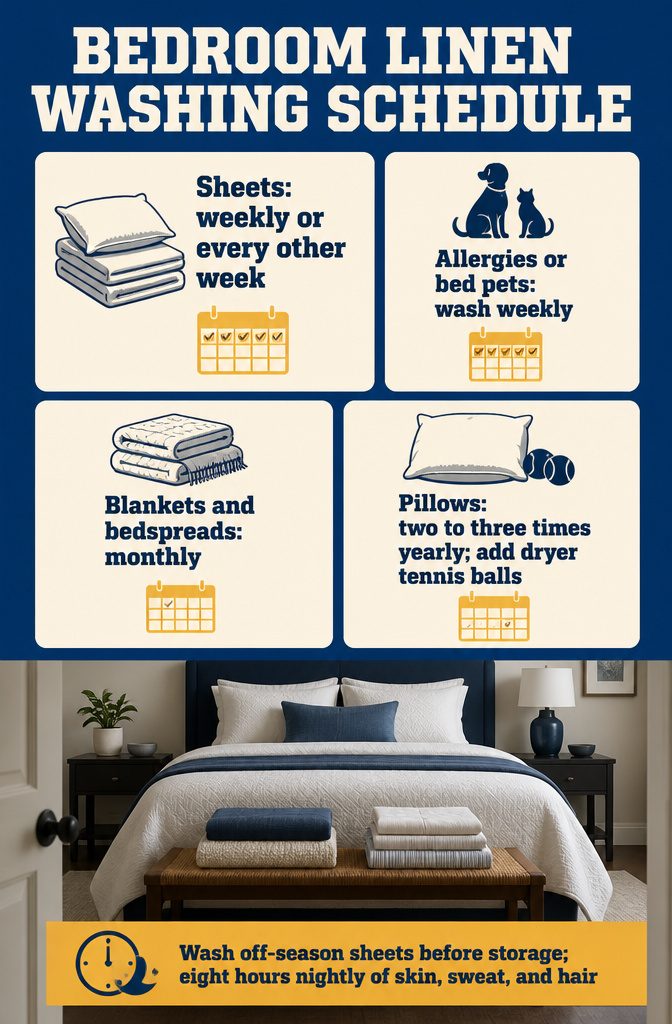
Sheets see eight hours a night of dead skin, sweat, and hair, so they need washing more often than most people think. Here’s what I recommend:
- Wash sheets weekly or every other week. Weekly is ideal if you have allergies or pets that sleep on the bed. Every other week works fine otherwise.
- Wash blankets and bedspreads monthly. They don’t touch skin directly, so the schedule can stretch longer.
- Wash pillows two to three times per year. Toss tennis balls in the dryer to keep them fluffy instead of flat and lumpy.
If you switch to flannel sheets in winter, wash your off-season sheets before storing them. Otherwise, you’re pulling musty linens out of the closet six months later.
Supplies I keep on hand
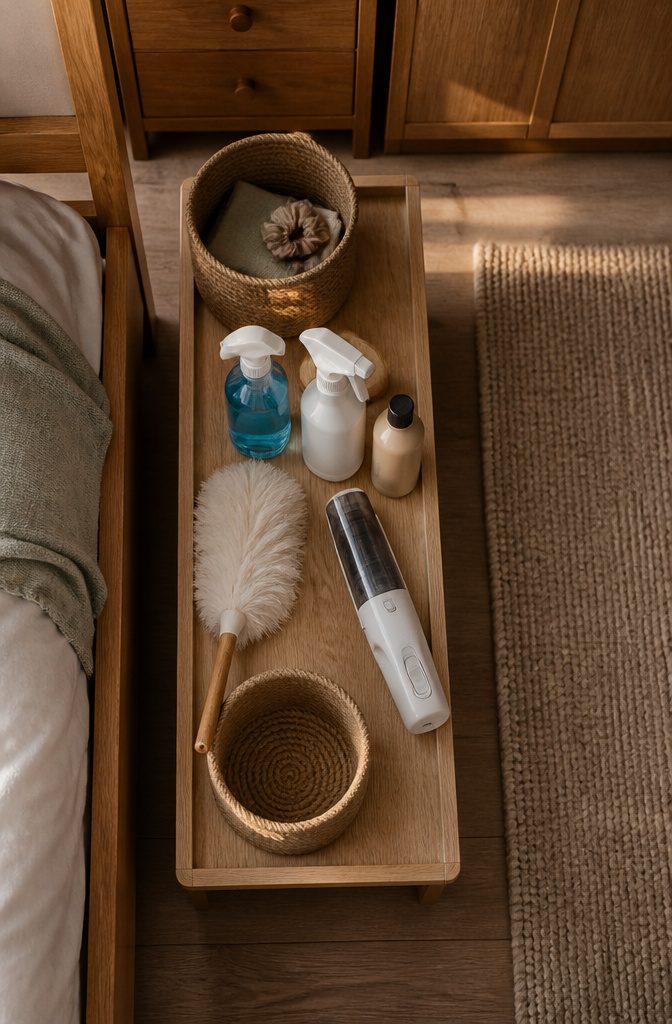
I keep a short list of cleaning supplies ready so the job never waits on a missing bottle or a dead vacuum battery.
- All-purpose cleaner – I use Mrs. Meyers throughout the bedroom: baseboards, nightstands, door frames. If your furniture is laminate rather than real wood, the same cleaner works on surfaces instead of needing separate polish.
- Glass cleaner – Windex or any streak-free formula for mirrors and windows. Newspapers in place of paper towels give a cleaner finish without lint.
- Furniture polish – Real wood gets lemon oil or dedicated polish. Laminate pieces can skip this and take the all-purpose spray instead.
- Vacuum – A Roomba handles scheduled passes so the floor stays ahead of dust. For manual work, any upright or stick vacuum that fits under the bed frame.
- Duster – A Swiffer duster reaches ceiling corners and lamp shades faster than a rag, and the disposable heads trap dust instead of spreading it.
- Small rope baskets – I use 9.5 × 9.5 × 7.1 inch baskets (8.2 liter capacity) on shelves and in closets to corral loose items during the reset. Anything without a clear home goes in a basket until the room is clean, then gets sorted properly.
When to do a quick clean instead of a deep one
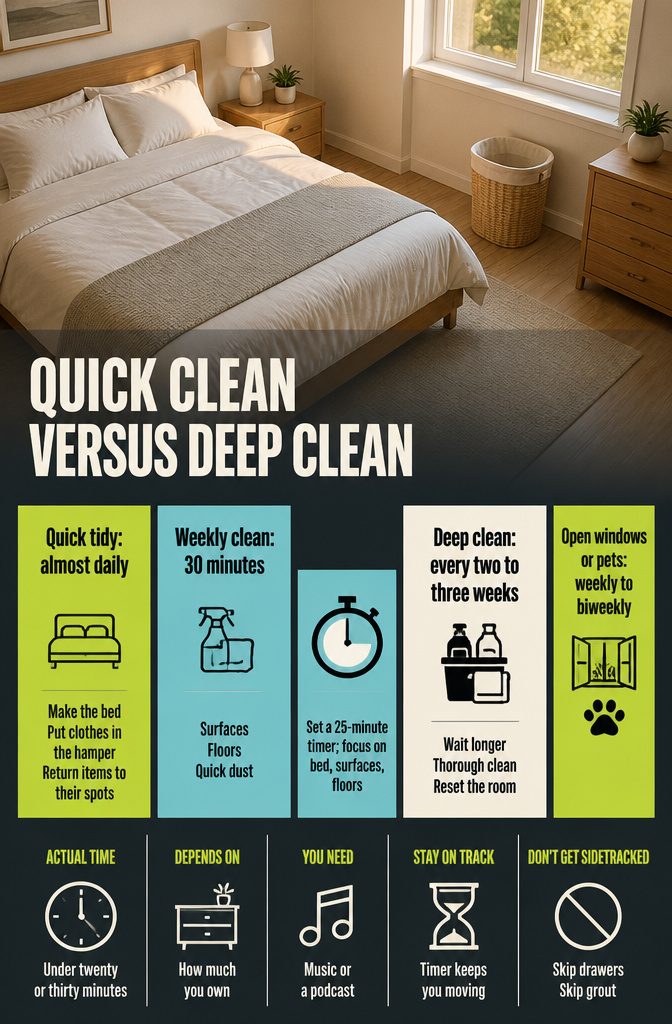
A quick clean almost daily keeps the mess from piling up in the first place.
I’m talking about making the bed when you wake up, putting clothes straight into the hamper, and returning makeup or grooming tools to their spots as you use them.
That habit means the 30-minute weekly clean stays manageable instead of turning into a multi-hour project.
For most bedrooms, that weekly 30-minute clean handles surfaces, floors, and a quick dust. If you leave windows open regularly, dust settles faster and you may need to bump that weekly clean to every week and a half.
A full deep clean can wait longer, typically every two to three weeks, or weekly to biweekly if the room sees heavy dust from open windows or pets.
The actual time depends on how much you own. A bedroom that isn’t crammed with excess clutter can be cleaned in under twenty or thirty minutes.
Set a timer for twenty-five minutes, put on music or a podcast, and focus on bed, surfaces, and floors without getting sidetracked by organizing drawers or scrubbing grout. The timer keeps you moving.
What makes the job faster
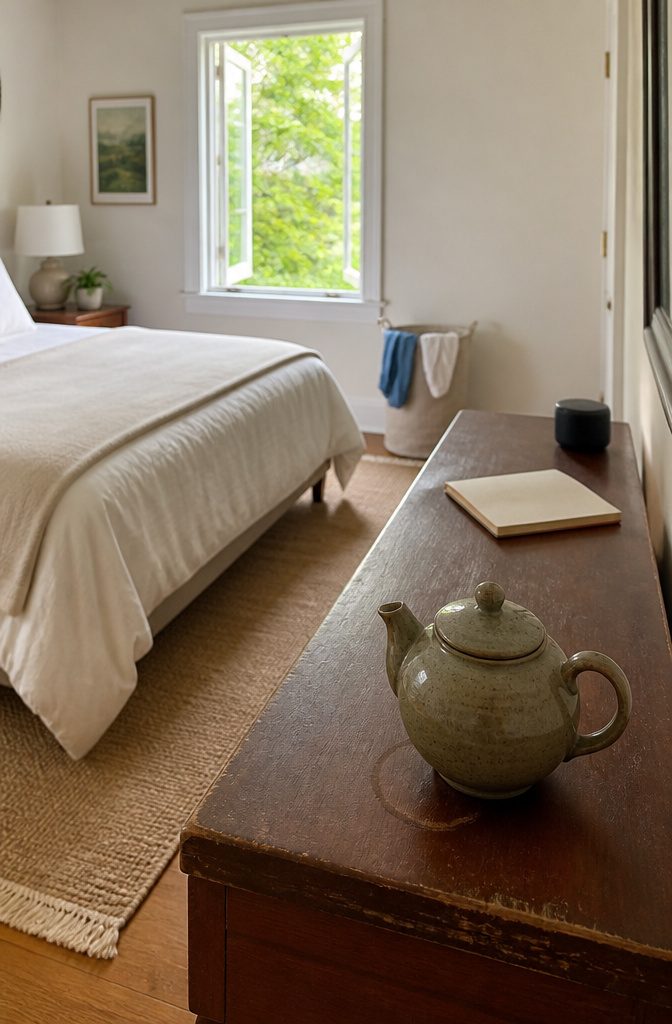
A few small changes make the next bedroom reset noticeably faster:
- Simplify what you own. Fewer items on the dresser and nightstand mean less time shifting things around when you dust. One client keeps a single teapot on an antique dresser, and the whole surface wipes clean in seconds.
- Pick a weekly cleaning day. Setting aside 30–40 minutes on the same day each week keeps dust and clutter from building up between deep cleans.
- Reset the room every morning. Make the bed, clear the nightstand, toss clothes in the hamper, and empty the trash before you leave. A few minutes at the start of the day means you always walk back into a room that feels finished.
- Play music while you work. Sources recommend pairing a playlist with a small reward when you finish. The combination keeps momentum up through the duller tasks.
Frequently Asked Questions
What supplies do you need to clean a bedroom?
You need all-purpose cleaner, glass cleaner, furniture polish (or all-purpose cleaner for laminate), a vacuum, and a duster.
These cover surfaces, mirrors, wood furniture, and floors. Keep them ready so you never delay a clean waiting on a missing bottle.
What is the best way to clean mirrors?
Spray glass cleaner on the mirror, make one horizontal swipe across the top with a squeegee, then swipe vertically from top to bottom.
Wipe the squeegee blade on damp terry cloth between passes to avoid streaks. This method works better than towels or microfiber and leaves glass perfectly clear.
What is the difference between standard and deep cleaning?
A standard clean takes 30 minutes and covers the bed, surfaces, and floors.
A deep clean happens every 2 to 3 weeks and adds tasks like vacuuming the mattress, cleaning under the bed, washing windows and blinds, and wiping baseboards. The deep version takes a few hours instead of half an hour.
What should I remove first when decluttering?
Remove trash first, then anything that belongs in another room.
Clearing what doesn’t belong makes every other task visible and opens up the floor and surfaces. Save sorting bedroom items like laundry and storage for after the room holds only what should be there.
What can you do to make a room look cleaner?
Make the bed as soon as you wake up, keep the nightstand clear of clutter, and put clothes in the hamper instead of leaving them out.
Fewer items on flat surfaces means less to dust and the space reads cleaner the moment you walk in.
How long should it take to tidy a dirty room?
Most bedrooms take 20 to 30 minutes if they aren’t crammed with excess clutter.
Set a timer for 25 minutes and focus on the bed, surfaces, and floors without getting sidetracked by organizing drawers. Timing depends on how full the room is and how long since the last clean.