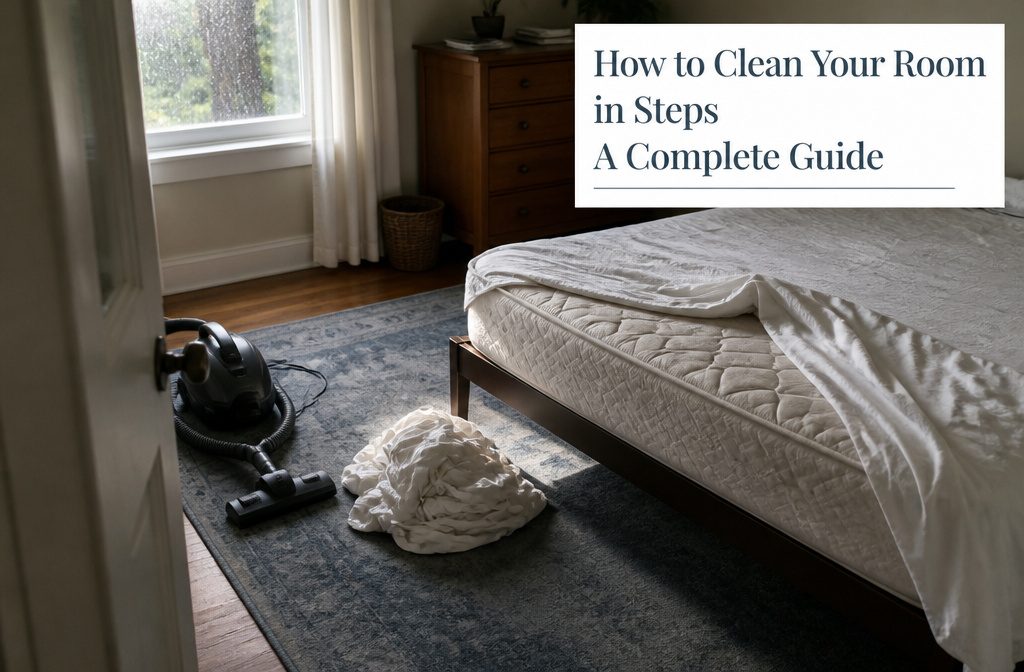
A clean room takes one to three hours depending on how much you let slide between sessions. Most people skip the mattress, which means they vacuum the floor but leave 20,000 dust mites sleeping where they do.
If you have allergies or asthma, washing sheets weekly instead of every other week cuts down on the sweat and dead skin that attracts those mites. The difference shows up fastest in how the room smells when you walk in.
1. Gather Your Supplies and Open the Windows
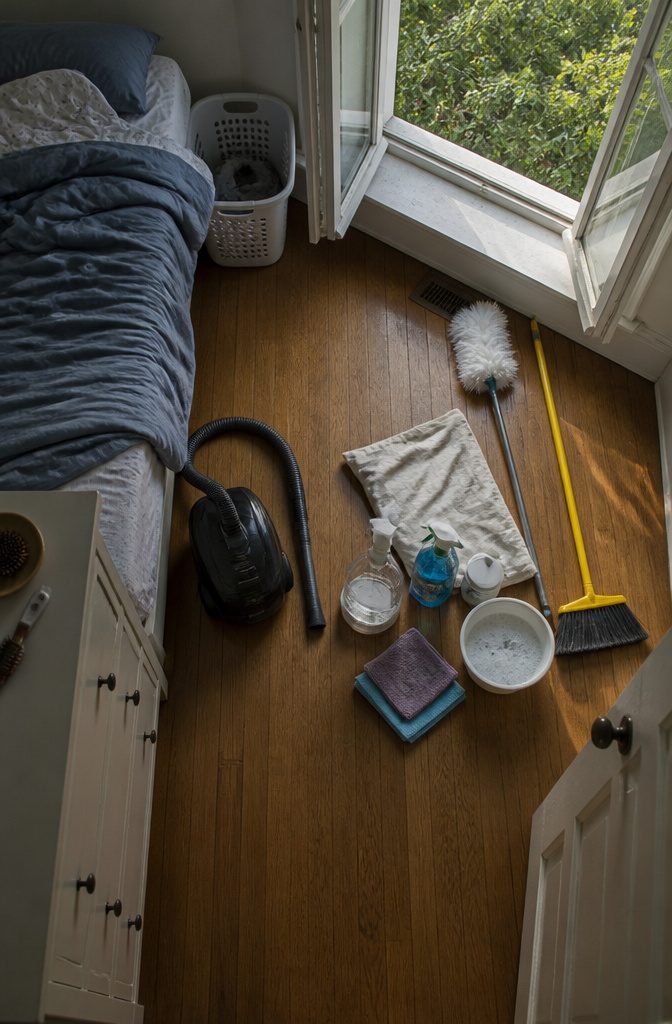
You will need a vacuum with a hand attachment, dusting supplies, a broom or something with a long handle, an old pillowcase, window cleaner, rags or cloths, warm water and mild soap, glass cleaner, disinfecting spray, a mop or long-handled duster, and baking soda.
If you want to save money on glass cleaner, combine water and white vinegar at a 1-to-1 ratio in a spray bottle.
Microfiber cloths work better than paper towels on most surfaces because they hold onto dust instead of pushing it around.
Open the windows before you start. Fresh air moves odors out while you work, and ventilation keeps cleaning spray from building up in a closed room.
If your place was built before 1978, check window sills and corners for paint chips while you have the windows open. Lead-based paint was common in older homes, and small chips collect where the sill meets the frame.
2. Pick Up and Declutter
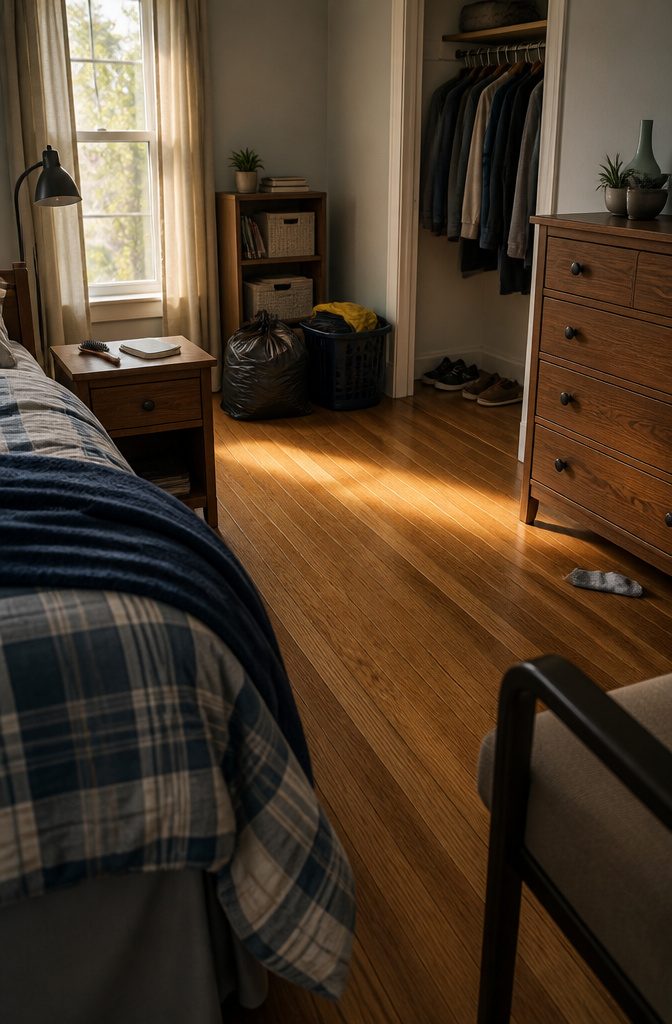
Before you can dust or vacuum anything, the floor and every flat surface need to be clear.
I start by scanning the room for anything that wandered in from another part of the house and putting those items back where they belong.
Dishes go to the kitchen, shoes return to the closet or the entryway, and books or magazines stack back on the shelf. This is not deep organizing yet; it’s triage.
Dirty clothes belong in the hamper the moment you take them off.
If you tried on a few outfits before settling on one, hang the rejects back up or fold them into the dresser rather than leaving them draped over a chair.
Clean surfaces make the whole room feel less chaotic, so I clear the nightstand and dresser down to only what gets used daily.
A hairbrush or a book is fine; three weeks of mail and five empty water glasses are not.
The closet and dresser come next.
Pull everything out, sort into piles for keeping, donating, or discarding, and then return only what you actually wear. A sturdy trash bag makes the donation pile easy to move out fast.
3. Start Laundry and Strip the Bed
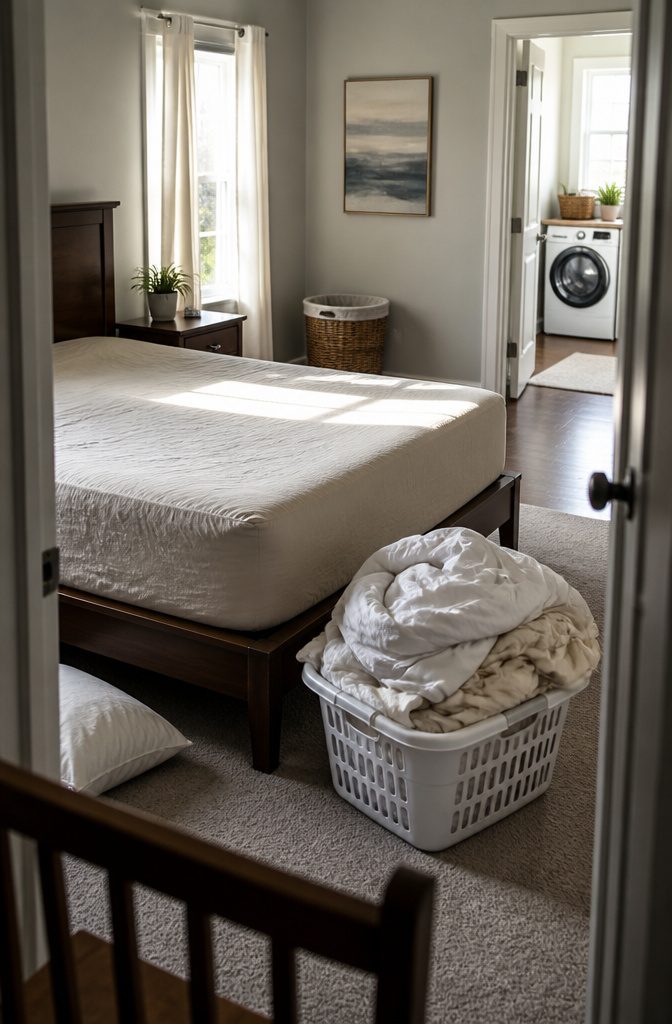
Strip the sheets, pillowcases, comforter and mattress cover before anything else. Get the load running now so the cycle finishes while you work through the rest of the room.
Sheets should be washed weekly, or every other week at the outside; blankets and bedspreads need it monthly. During cold and flu season, I push sheets to once a week without fail.
Dead skin, sweat and body oils soak into bedding fast. That buildup attracts dust mites, which matters if you have allergies or asthma.
Even if you don’t, clean sheets smell better and keep the whole room feeling fresher. The difference is immediate when you walk in after a full wash.
4. Dust from High to Low
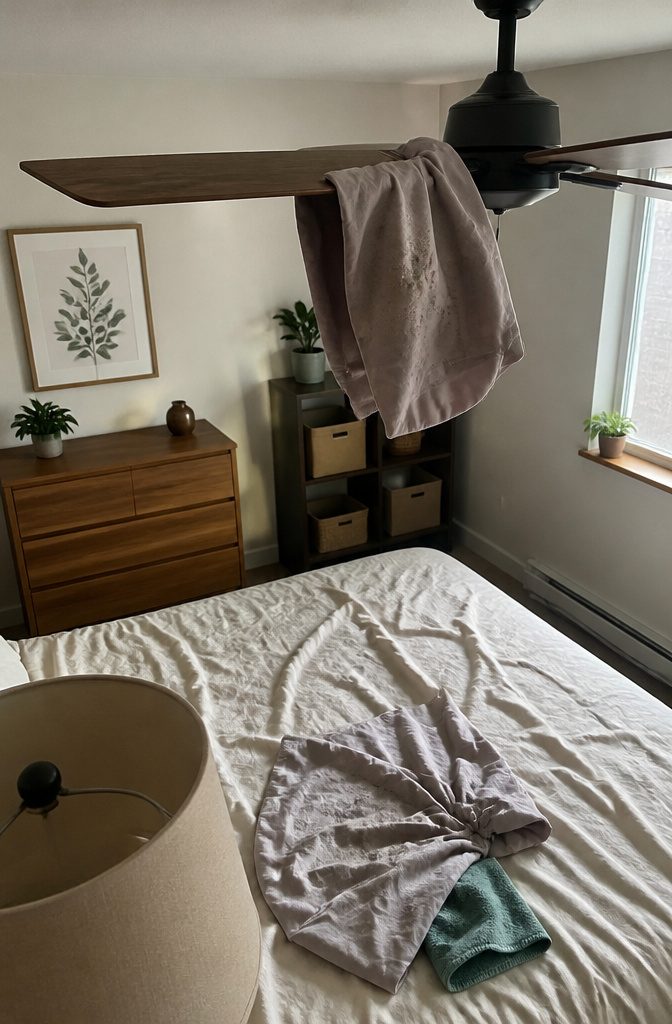
Start at the ceiling and work down so the dust you knock loose lands on surfaces you haven’t cleaned yet.
Slip an old pillowcase over each ceiling fan blade to catch dust while you wipe the surface with a damp cloth.
This trick keeps the dust from falling all over the floor or furniture, and the pillowcase goes straight into the wash when you’re done.
Leave the dirty sheets on the bed while you dust. They’ll catch whatever falls from overhead light fixtures, corners, and the tops of shelves.
If you have removable globes on an overhead light, wash them in the sink and set them aside to dry. Otherwise, dust them in place.
Use a damp cloth on windowsills, dresser tops, nightstands, and the tops of mirrors or framed art. A moist cloth locks dust in place instead of just pushing it around, which means less resettling.
Finish with baseboards and any furniture you haven’t reached yet, still working top to bottom.
5. Clean Windows, Mirrors, and Window Treatments
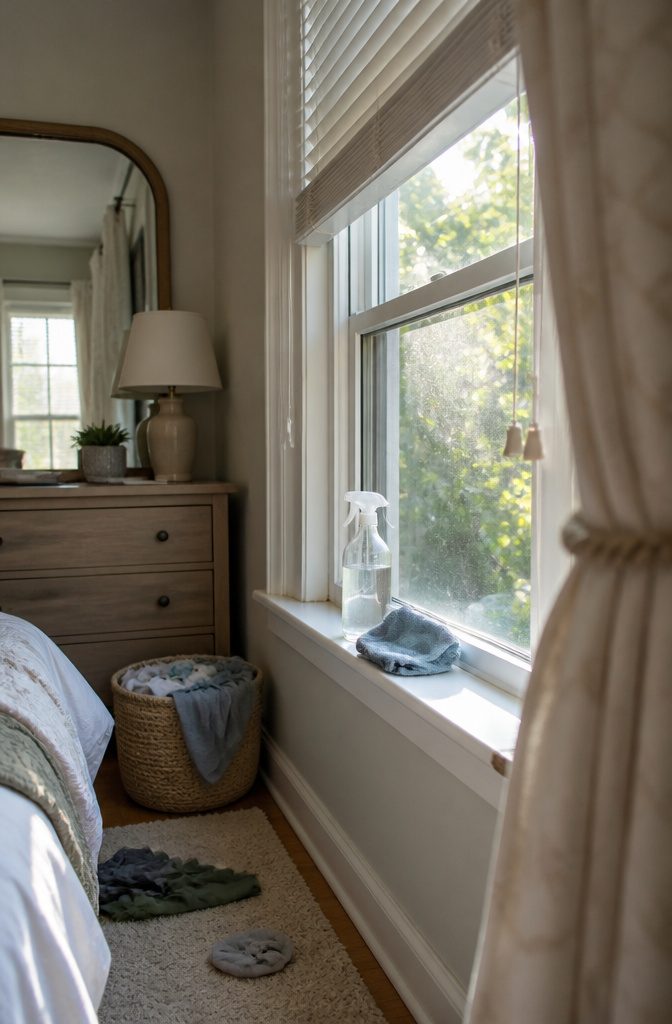
I clean windows and mirrors after the dust is gone but before touching the floors, so falling cleaner or drips land on a surface I am about to vacuum or mop.
Spray a 1-to-1 mix of water and white vinegar into a spray bottle, mist the glass, and wipe with a dry microfiber cloth.
A circular motion leaves streaks; straight passes top to bottom work better. The same cloth and cleaner handle window frames and sills.
If you have blinds, wipe each slat with a damp microfiber cloth or use the brush attachment on the vacuum at low power.
Curtains come down and go through the wash if the fabric allows it; check the care tag first.
If you live in a house built before 1978, pay extra attention to window sills and corners for lead-based paint chips while you wipe them down.
6. Clean and Organize Storage and Furniture
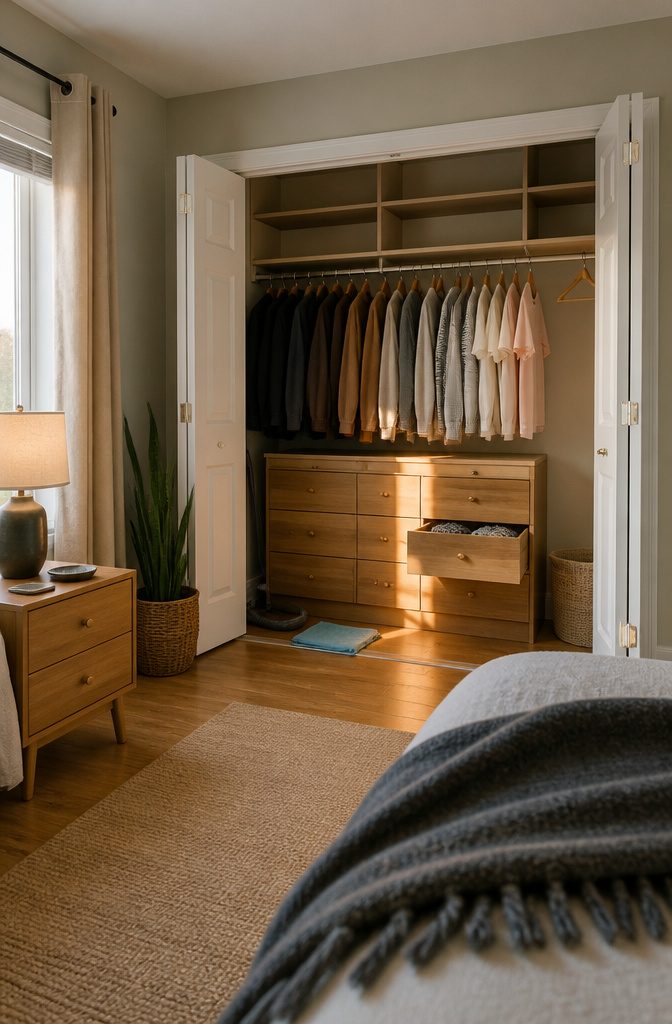
Start with furniture surfaces. Dust the tops and edges of your dresser, nightstand, desk, and any shelving with a microfiber cloth.
Work down the front of drawers and across any exposed sides. If you see sticky rings or buildup, wipe with a damp cloth and dry immediately so the finish doesn’t streak.
Pull everything out of your closet and dresser before you clean inside.
Clothes left in place hide dust and keep you from reaching the back corners. Vacuum the closet floor and the shelf above the hanging rod.
Wipe each shelf with a barely damp cloth, then let it dry before you put anything back. Open each dresser drawer, vacuum out the dust along the seams, and wipe the interior if it feels gritty.
When you return clothes to the closet, group by type and hang the longest, bulkiest pieces on the left, flowing shorter and lighter toward the right.
That slope keeps the space from feeling blocked and makes each piece easier to spot.
In the dresser, fit all pajamas into one drawer if you can. Consolidating categories makes mornings faster and signals when you have too much to keep organized.
7. Clean the Mattress and Bed
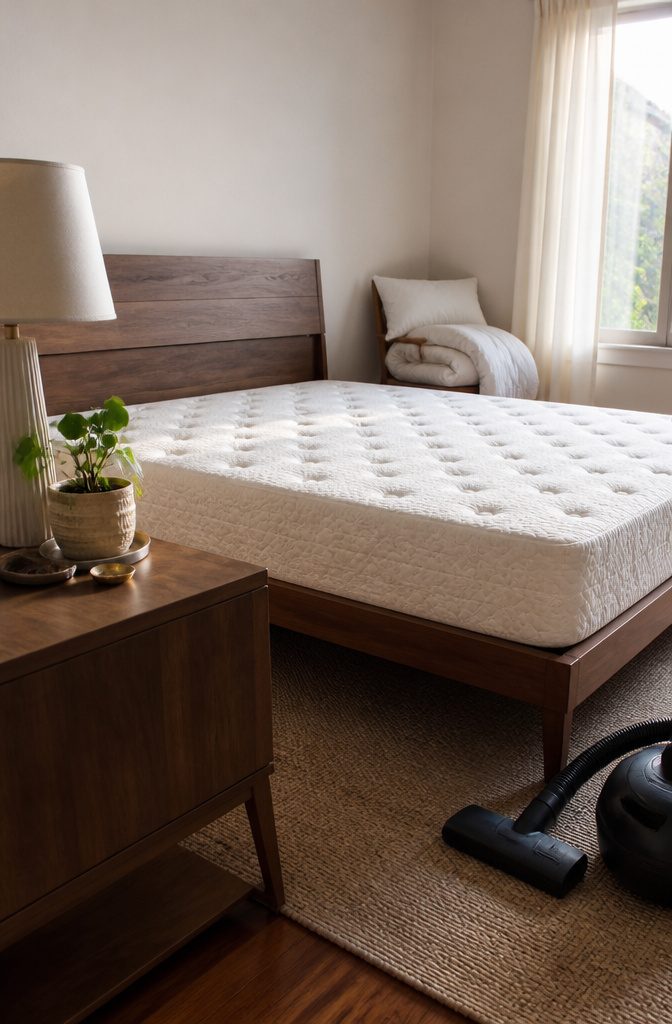
Pull the bedding off completely, then vacuum the mattress on the lowest setting to protect any fillings inside. Work slowly across the surface, letting the vacuum pull dust mites and debris from the fabric without damaging foam or springs underneath.
Once you finish the top, flip the mattress if it’s built to turn, or rotate it head to foot if it has a pillow top that prevents flipping.
After vacuuming, leave the mattress bare and let it air for at least half an hour. This gives trapped moisture a chance to escape and keeps mildew from settling in.
While the mattress sits exposed, vacuum or wipe down the headboard, including any gap between the headboard and the mattress where dust collects. If you haven’t washed the pillows or comforter in two to three months, now is the moment.
A comforter left unwashed can harbor around 20,000 dust mites, which aggravates allergies. Check the care label, but most can handle a wash at 60 degrees to kill bacteria.
8. Clean Floors and Areas Under Furniture
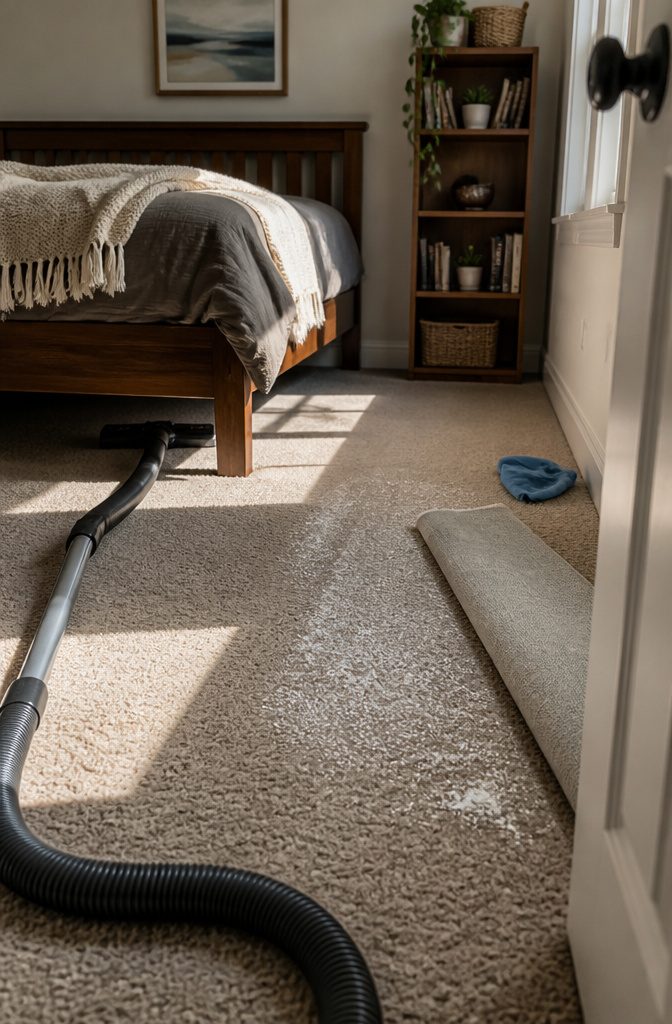
Once you’ve cleared the floor of clutter and belongings, vacuum as you enter the room and vacuum as you exit.
That way high-traffic spots get hit twice, which matters more than starting at the far corner and working your way out in a perfect grid.
Run the vacuum on full power and reach as far under the bed and furniture as you can without moving anything yet.
For carpets, sprinkle baking soda across the surface, let it sit for a few minutes to absorb odors, then vacuum twice in opposite directions. The first pass lifts embedded dirt; the second catches what the first missed.
If you have area rugs and they’re light enough to carry, take them outside and beat the dust out before vacuuming the floor underneath. That removes more dirt than vacuuming over the rug in place.
Move furniture to vacuum or mop behind and underneath it. Dust, mold, and moths collect in spots you can’t see, and ignoring them turns a surface clean into a temporary one.
Use proper lifting or ask for help if the piece is heavy. Once the floor is clear, wipe down baseboards with a damp cloth to remove built-up dust and grime.
If you have hard flooring, mop after vacuuming, and make sure the mophead is fresh so you don’t streak the floor with old dirt.
9. Remake the Bed and Restore Items
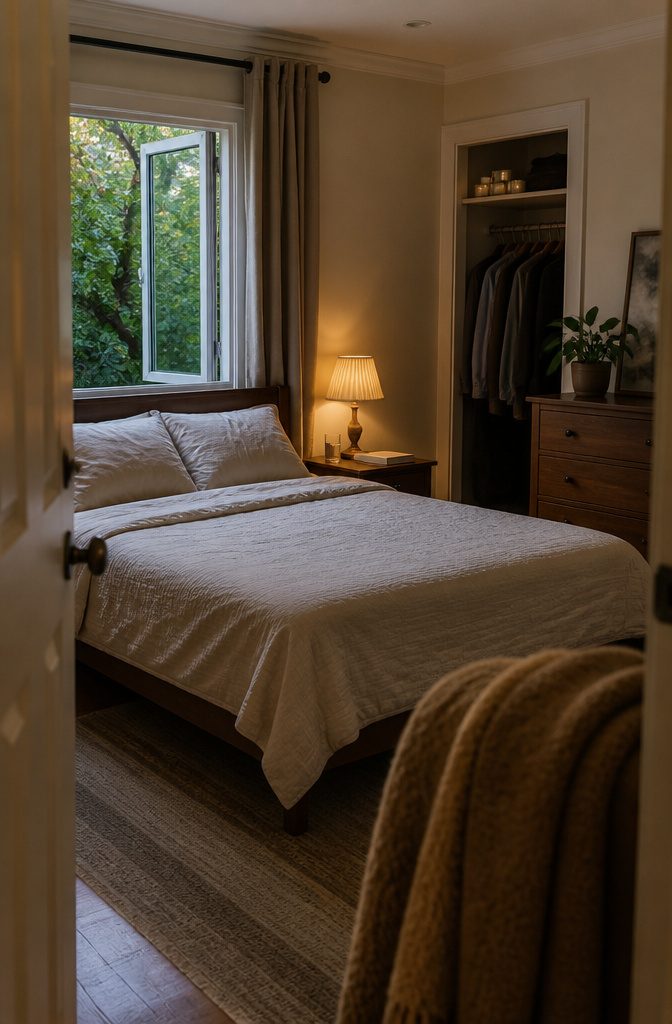
I make the bed with fresh sheets as soon as the mattress is dry. Clean sheets absorb sweat, dead skin and body oils while you sleep, and changing them every week or two keeps the room from smelling stale.
For anyone with allergies or asthma, a weekly wash makes a real difference, because those same oils attract dust mites.
While the bed is still open, I check the light bulbs.
A burned-out bulb in the ceiling or bedside lamp gets replaced now, not later when I remember why the room feels dim. I keep spares in the hall closet so this takes thirty seconds.
Once the bed is made and everything is back where it belongs, I open a window for ten minutes if the weather allows it. Fresh air moves out any lingering dust.
If that is not an option, I light a candle. The room should smell neutral or faintly pleasant, not like cleaning products or the laundry that sat too long before the wash.
Five Habits That Keep a Bedroom Clean
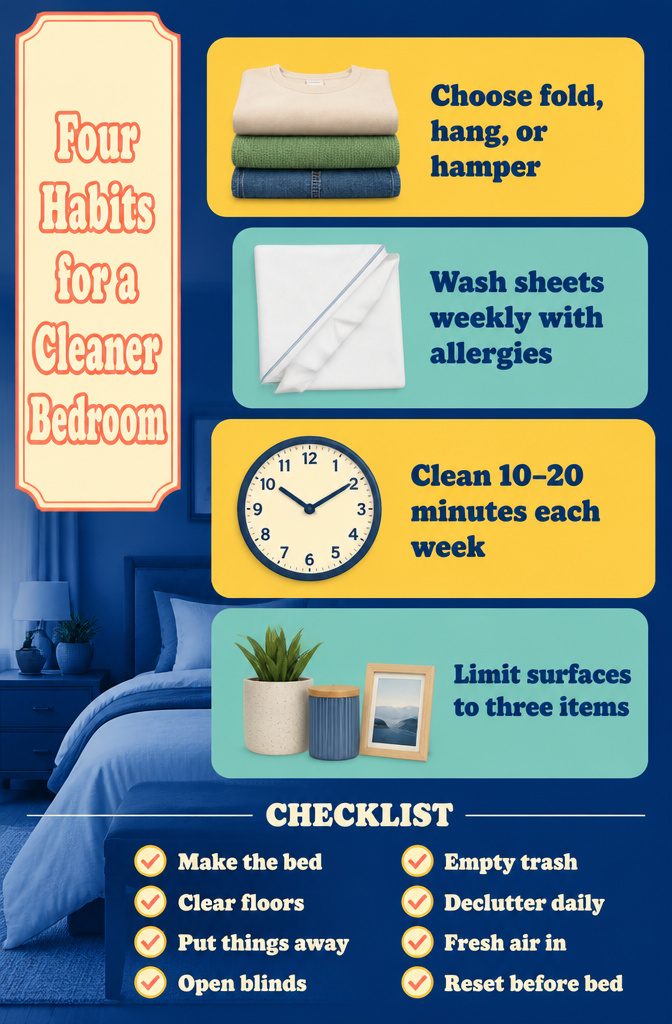
Once the deep-clean is done, the routine is what keeps it that way. These five habits take minutes each and stop mess from building back up.
- After you take off your clothes, pick one of three options: fold it, hang it, or put it in the hamper. That’s it. No fourth choice where it lands on the chair or the floor. Mess attracts mess, and a pile on the floor becomes permission to add to it.
- Wash sheets once a week if you have allergies or asthma, every couple of weeks otherwise. Sweat, dead skin cells, and body oils soak into the fabric while you sleep, and that draws dust mites.
- Devote 10–20 minutes a week to cleaning. Pick a day, dust surfaces with a microfiber cloth, vacuum or mop the floor, and hit corners and spots under furniture. A short weekly session beats waiting until the room looks bad.
- Keep no more than three things on a surface. Nightstand, dresser top, desk: if every flat space is covered, dusting becomes a puzzle and clutter hides in plain sight.
Disinfect Door Handles and Light Switches
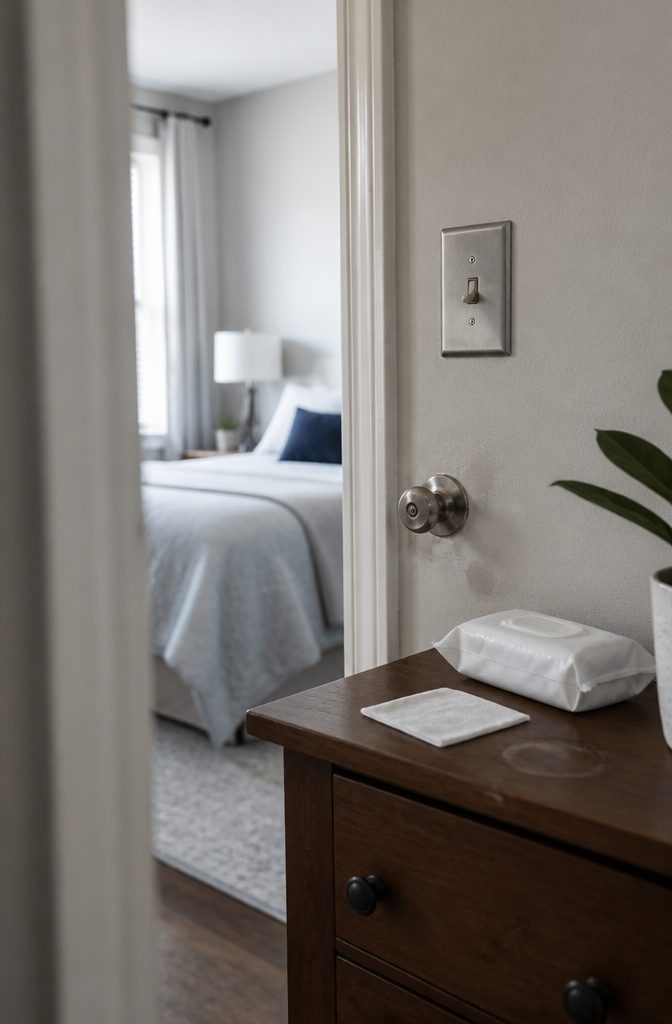
Door handles, light switches, and doorknobs collect bacteria and viruses every time you touch them, and disinfecting these high-touch surfaces is one of the final steps that resets a room completely.
I use Clorox Disinfecting Wipes for this, which kill 99.9% of bacteria and viruses without needing a separate spray and cloth.
Start with the door handle on both sides, then move to the light switches, and finish with any other surface you touch regularly in the room.
The wipe does the work in a few seconds per surface, and the fresh scent is a signal that the room is finished.
This step is quick but easy to skip when you are tired, and skipping it means the cleanest-looking room still carries whatever was on your hands the last hundred times you turned on the light.
Deep-Cleaning Tasks for Vent Covers, Pillows, and Humidifiers

A few cleaning jobs sit outside the weekly rhythm but still matter for air quality and comfort.
Unscrew vent covers from the floor or ceiling and soak them in hot water and dish soap to clear away months of dust buildup.
I do this whenever I notice reduced airflow or visible grime on the slats, usually every few months.
Pillows collect dead skin, oils, and allergens faster than most people realize.
Wash them every six months, or quarterly if you have allergies. A top-loader takes 1/3 cup of cleaning solution; a front-loader uses 1 tablespoon per pillow.
Set the cycle to gentle and choose the extra-large load setting so the pillows tumble freely. Two pillows per load prevents them from staying waterlogged.
If you run a humidifier, fill the tank with a 1-to-1 mix of water and vinegar and let it sit for a few hours before rinsing well.
Wipe down the body and spout, then dry everything completely. While you’re handling equipment, check your smoke detector to confirm it’s still working.
Frequently Asked Questions
How to properly deep clean your room?
Start by opening windows and gathering supplies, then declutter and strip the bed. Dust from ceiling to floor, clean windows and mirrors, vacuum or wipe inside closets and drawers, clean the mattress, and finish by vacuuming and mopping floors.
The full sequence takes 1 to 2 hours and covers surfaces you skip in a weekly clean.
What’s the fastest way to clean a bedroom?
Put away everything that’s out of place, make the bed, remove dishes and glasses, and wipe surfaces with a damp cloth.
Vacuum the floor if you have a few extra minutes. This approach clears visible mess in 10 to 15 minutes but skips deeper tasks like dusting high surfaces or washing bedding.
What are the 6 basic cleaning steps?
Declutter and return items to their proper rooms, strip and wash bedding, dust from ceiling to baseboards, clean windows and mirrors, vacuum or mop floors, and remake the bed with fresh sheets.
These steps cover the tasks that reset a bedroom completely.