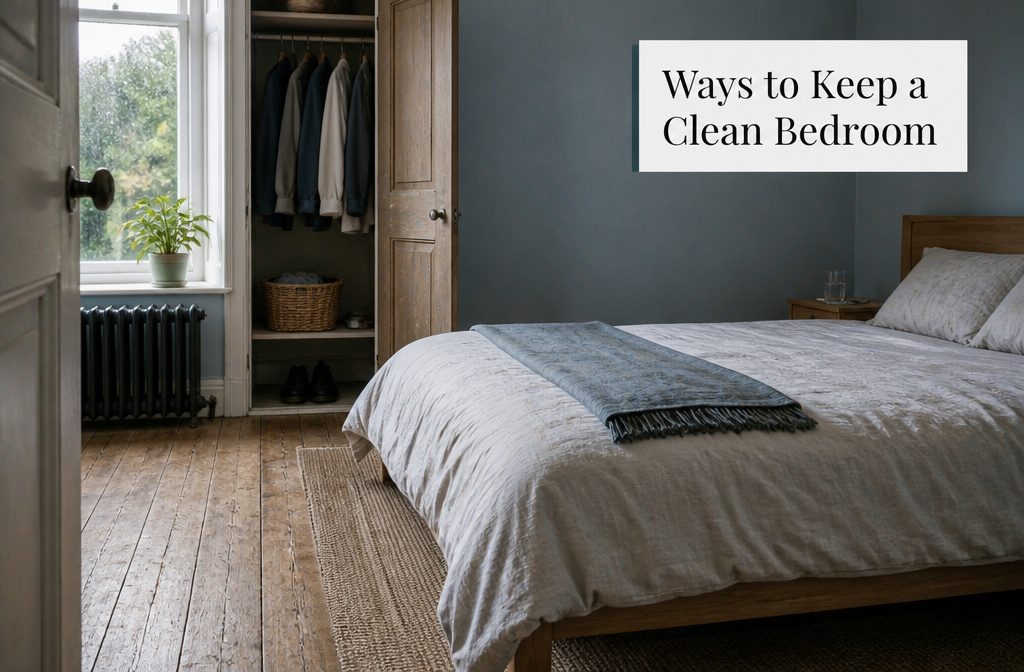
A bedroom stays clean when you put things back right after using them and keep surfaces clear enough to actually clean.
The habit breaks when you’re tired, when clutter doesn’t have an assigned spot, or when the reset takes longer than fifteen minutes because too much drifted since the last pass.
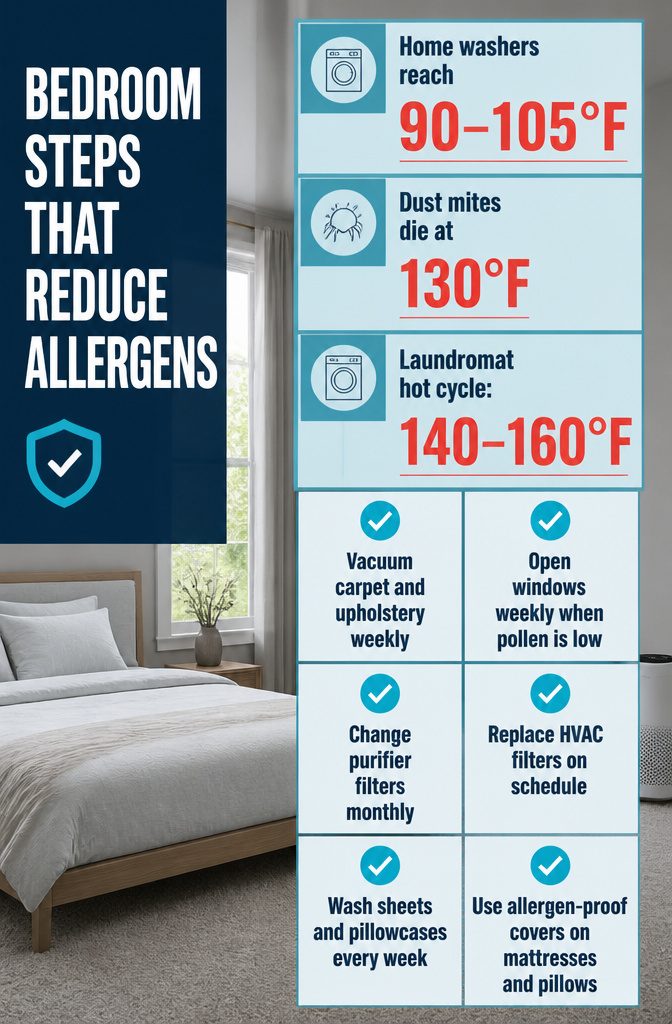
Washing sheets weekly in hot water matters more than most people expect: home machines only reach 90°F to 105°F, which feels warm but doesn’t kill dust mites.
1. Put Clothes Away Instead of Leaving Them Out
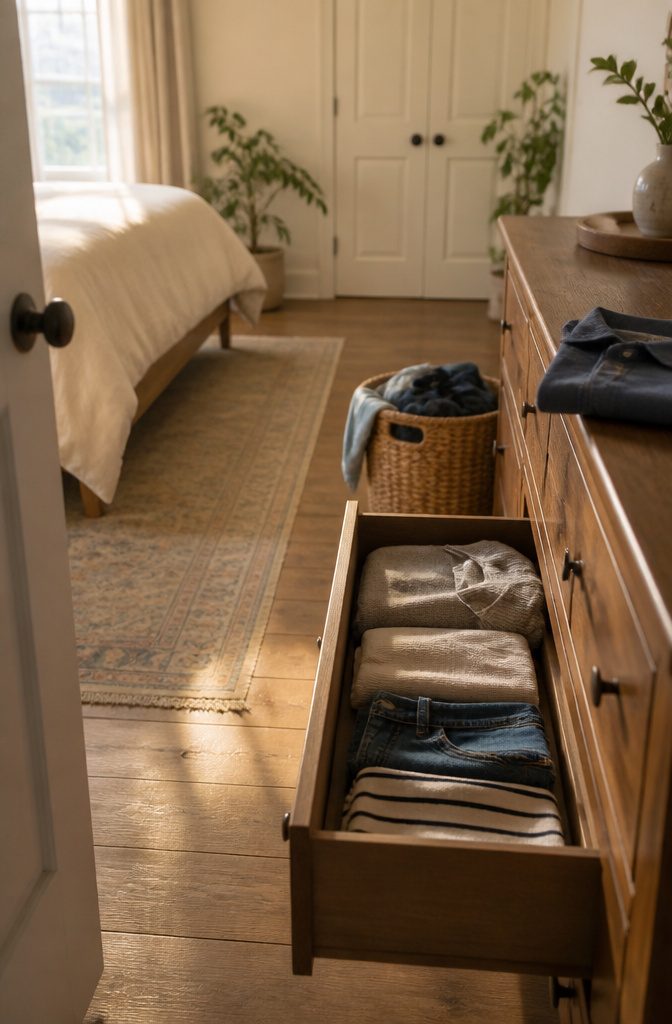
Clothes land in one of two places: back in the closet or dresser if they’re clean, straight into the hamper if they’re dirty.
That ten-second choice at the end of the day keeps a bedroom from turning into a clothing obstacle course.
Reddit users who finally started using a hamper instead of dropping jeans on the floor called it a turning point, and the reason is straightforward: mess attracts mess. One shirt on a chair invites three more by the weekend.
The same rule applies to clean laundry once it comes out of the dryer.
Folding a load and then leaving it on the bed for three days trades one pile for another. I put clean clothes away right after folding, and the difference in how the room reads is immediate.
No chair draped with "maybe clean" jeans, no stack slowly migrating across the comforter. If something doesn’t fit or hasn’t been worn in months, that’s a separate decision for later; leaving it in the cleaning path just adds static.
2. Clear Clutter and Give Belongings a Home
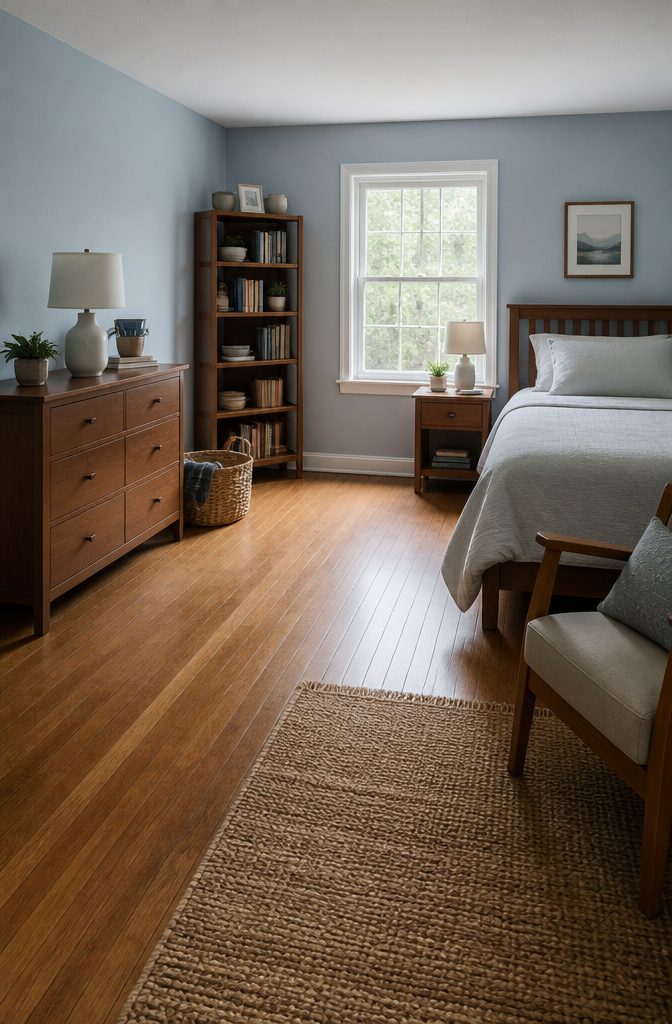
Remove anything that doesn’t belong in the bedroom first.
Trash, dirty dishes, and laundry that hasn’t made it to the hamper create visual noise before you even start sorting what stays. I clear these out before touching anything else, because once they’re gone, the actual clutter problem shrinks fast.
Next, I sort what remains into three groups: items that belong in this room, items that need to go elsewhere, and anything worth donating or tossing.
A basket for the second group prevents repeated trips to other rooms mid-task, which keeps the momentum going.
Return items to their assigned spots as you sort, not after. If something doesn’t have a spot yet, that’s the problem to solve right now.
Floors, nightstands, dressers, and chairs collect items that gradually feel permanent. Books stacked behind the nightstand, papers near the closet, random objects on a chair.
I move these off their surfaces and decide whether they belong in the bedroom at all. Work papers and stress-inducing items don’t need to live in a room meant for rest.
3. Make the Bed

Two minutes to pull the covers up and stack the pillows takes the room from lived-in to put-together faster than any other single move.
The bed is the largest surface in the room, and when it looks neat, the whole space reads as cleaner even if nothing else has changed.
Hotel corners and decorative shams are optional. Smooth the comforter, straighten the pillows, and the visual weight of the unmade bed disappears.
If you’re buried in throw pillows and layered shams, that setup is working against you. I’d strip it down to what you actually use at night, maybe one or two extras for looks.
Making the bed becomes a habit when it doesn’t feel like a production, and that habit pays off every time you walk back into the room during the day.
4. Keep Bedroom Surfaces Clear Enough to Dust
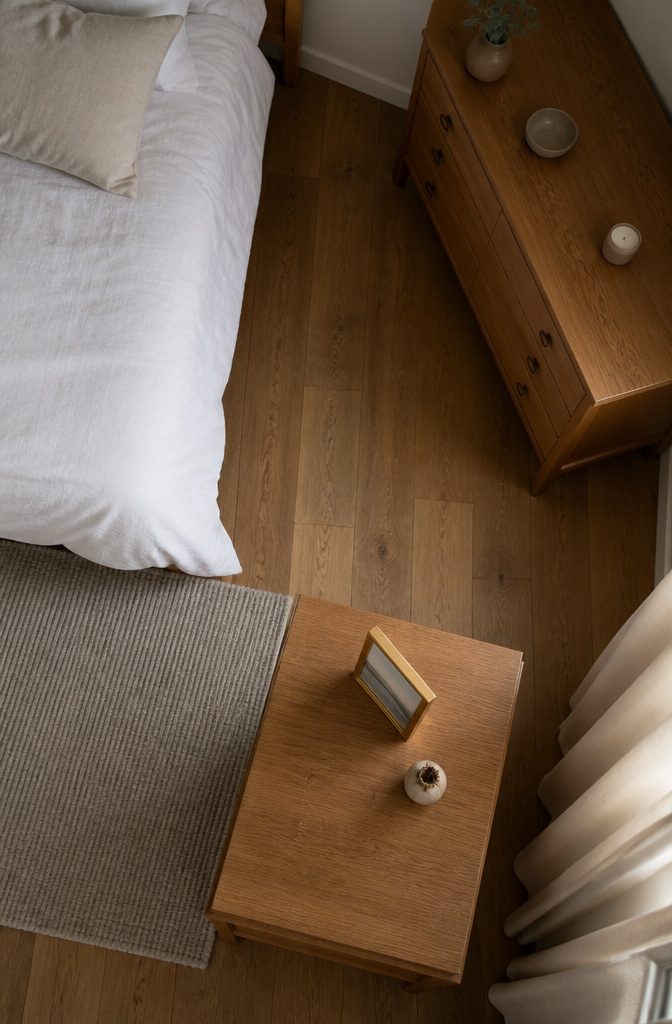
Flat surfaces collect dust faster when they are crowded, and dusting around ten small objects takes longer than wiping down two.
I aim for no more than three to five items per surface, depending on how large it is — a nightstand holds fewer than a dresser top.
Some minimalists clear every surface completely, but I find that sterile. A picture frame or one object that means something makes the room feel like yours without creating clutter that hides dust.
When I clear a nightstand or dresser, I take everything off first, then decide what goes back.
Most of it does not belong there. Lotion bottles, loose change, stacks of books and magazines all attract dust mites, which matters if allergies are part of the picture.
I keep one meaningful object and leave the rest off. That makes the weekly dusting take seconds instead of minutes, and the room looks tidier even when I have not cleaned it yet.
5. Clean Floors and Keep Them Clear
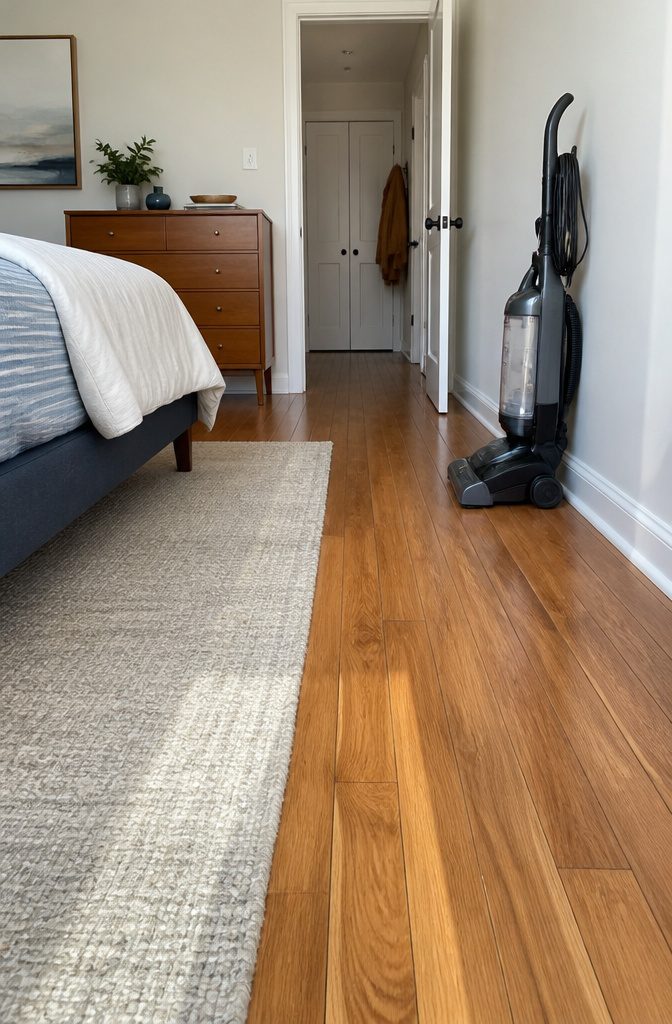
Vacuum or sweep at least every other week — carpets trap dust and allergens, and hard floors show them. Before you start, check for cords, small items, or anything that might jam the vacuum or trip you while you work.
Go slowly enough to pull up visible debris, and adjust the setting for carpet pile if your machine has one.
Hard floors need sweeping or dry-mopping first, then a damp pass if the manufacturer allows it. Skip excess water on wood, laminate, or anywhere moisture can seep into seams.
The floor stays cleaner when nothing sits on it that doesn’t belong there.
Clothes land in a hamper, not in a heap by the bed. Books go back on the shelf.
Papers move to a desk or filing spot. I find that items left on the floor long enough start to feel permanent, and the room reads messy even after you’ve put everything else away.
A clear floor also means you can actually vacuum edges, corners, and under furniture without moving obstacles first. Keep walking paths and vents open, and don’t stack things in front of outlets or safety equipment.
6. Wash Bedding on a Regular Schedule
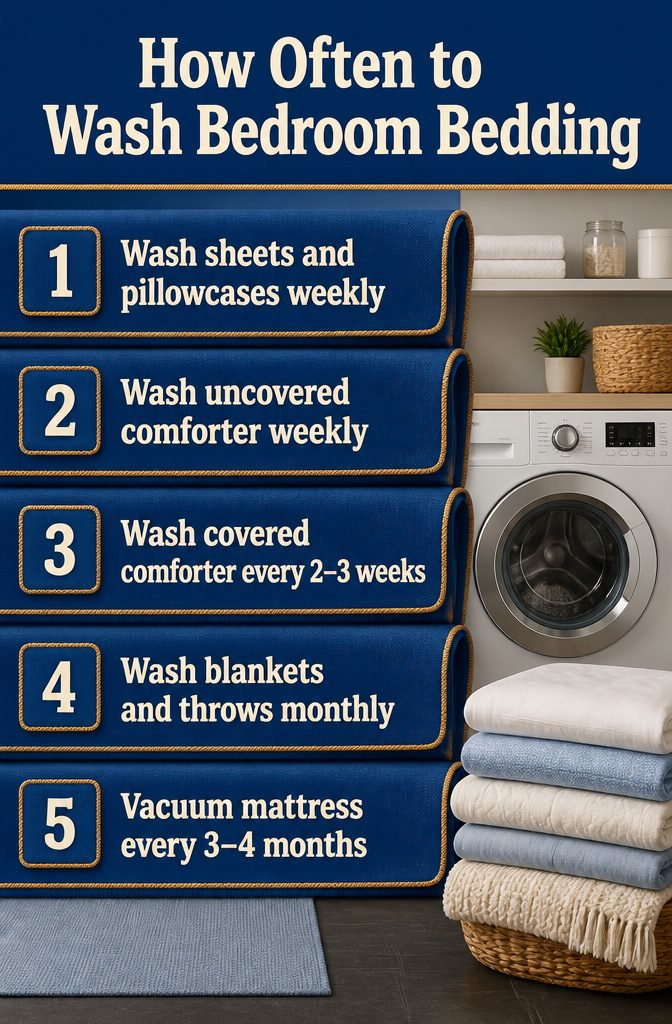
Sheets and pillowcases should be washed at least once a week in hot water to stop bacteria and dust mites from building up.
If you sleep directly under a comforter or duvet cover without a top sheet, wash it weekly too. When you do use a top sheet, you can stretch the comforter or duvet cover to every two or three weeks.
Blankets and throws typically need washing monthly. Every three or four months, vacuum the mattress and wash your pillows if the care tag allows it.
People with asthma or allergies should stick to the weekly schedule for all bedding that touches skin. For everyone else, washing sheets every couple of weeks usually keeps things clean enough.
Always follow the care instructions on the tag. Some items like weighted blankets, electric blankets, and certain pillow fills have specific temperature or cycle limits that matter.
7. Dust and Clean Reachable Surfaces
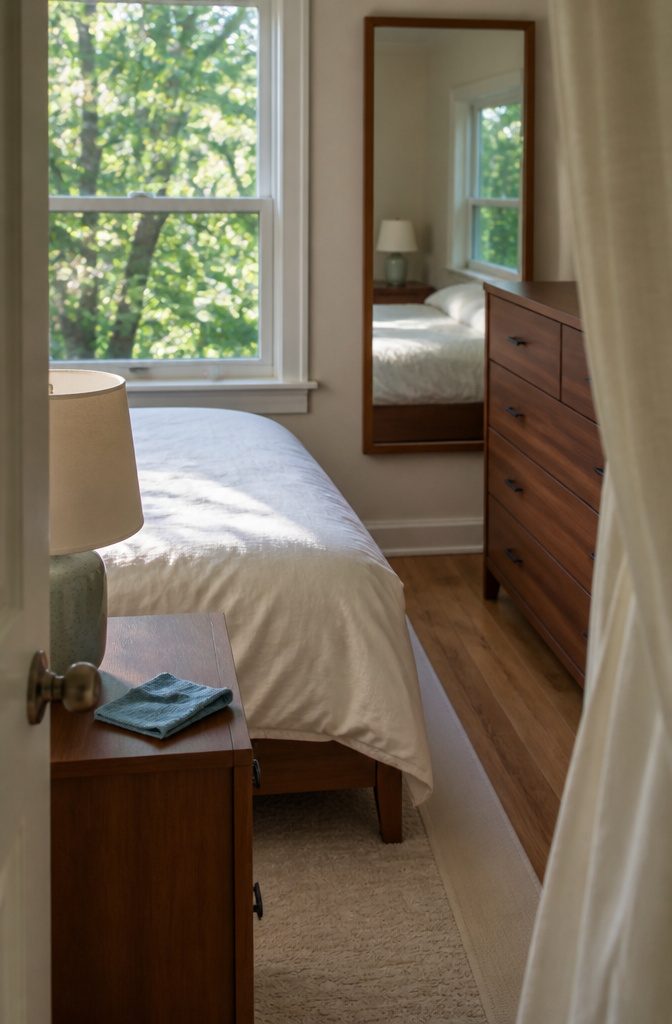
I dust reachable surfaces once a week — nightstands, dressers, window sills — using a microfiber cloth and mild all-purpose cleaner.
Microfiber picks up dust instead of pushing it around, and it works dry or barely damp. For mirrors and windows, I switch to glass cleaner and wipe in one direction to avoid streaks.
The timing matters more than most people think. I clean mirrors only when they show marks, and I skip any product whose label calls for ventilation, protective equipment, or a contact period I can’t finish in the time I have.
A visible surface cleaned with the wrong method takes longer than leaving it another week.
Dusting before vacuuming keeps the floor from collecting what falls. I’ve found that keeping surfaces clear of clutter makes dusting faster and cuts down on dust mites near the bed, which helps if allergies are part of the picture.
A bedside table covered in bottles and books is harder to clean and collects more dust in the first place.
8. Keep Up a Short Daily or Weekly Reset
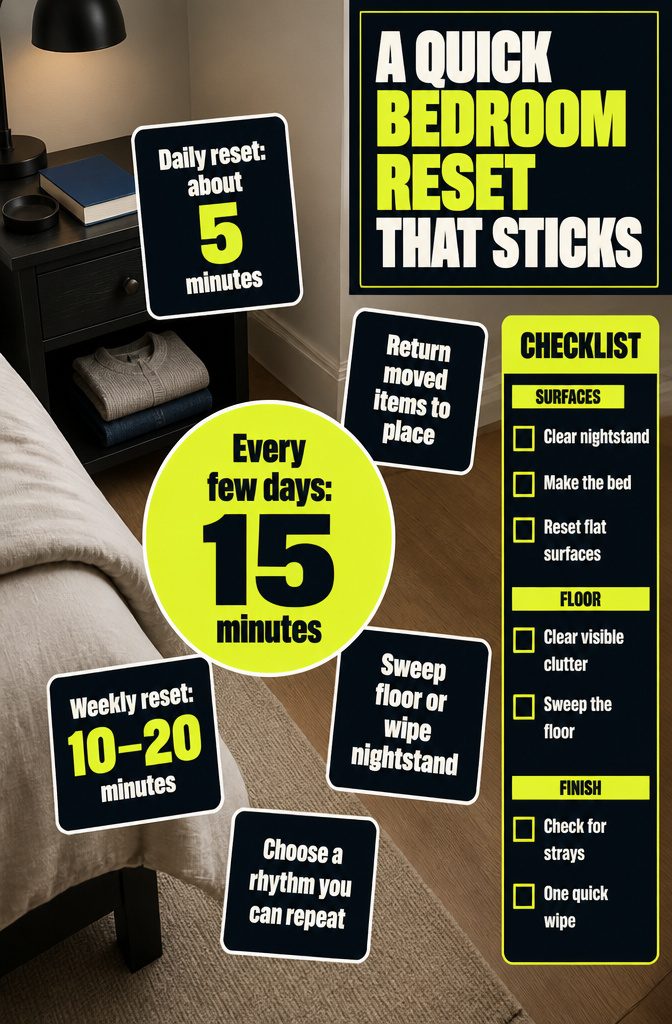
A bedroom that gets fifteen minutes of attention every few days stays ahead of the mess instead of chasing it.
I find the reset works better than waiting for motivation to arrive, because clutter grows quietly and then all at once.
The advantage is speed: when you put back what moved since the last pass, nothing has time to pile up or require decisions about where it ought to live.
The daily version runs shorter, closer to five minutes, and covers just the high-traffic items that land on surfaces between uses.
Weekly resets take ten to twenty minutes and add a sweep of the floor or a wipe of the nightstand.
Both approaches rest on the same mechanic: small, repeated effort costs less than the hour it takes to dig out from under a week of drift.
I lean toward the weekly rhythm for bedrooms that see lighter use during the day, and the daily check for rooms where clothes and objects move constantly.
The timing matters less than consistency. A reset that happens reliably beats a longer clean that keeps getting postponed.
9. Clean Under the Bed and Other Overlooked Areas
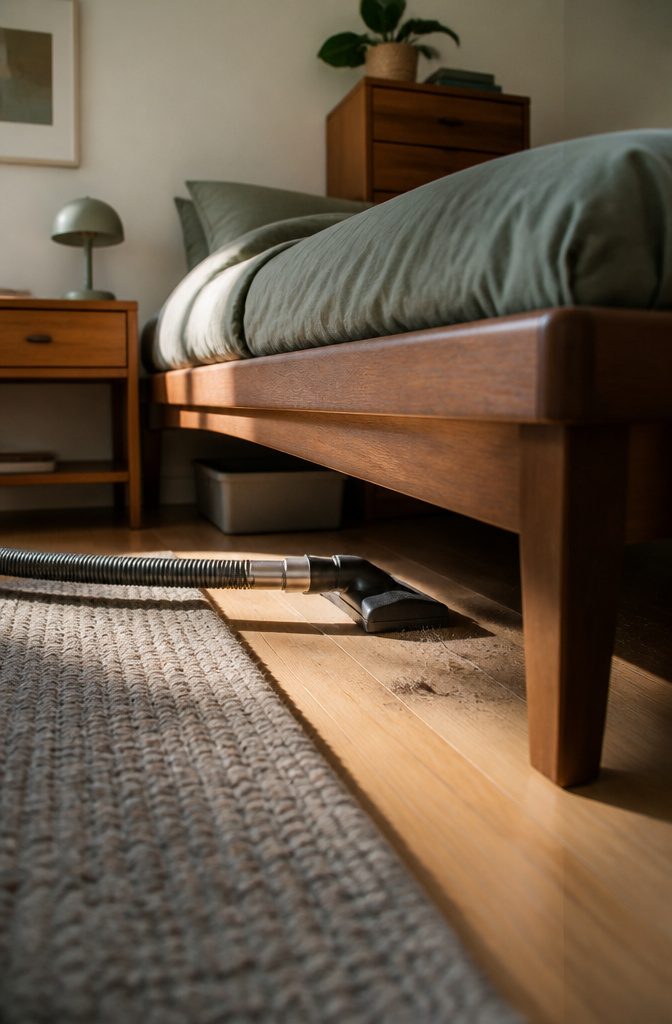
The space under your bed collects dust, pet hair, and allergens whether you see them or not.
I vacuum under the bed and other furniture at least once a month to catch what settles there, which makes a difference if you wake up stuffy or notice your bedroom air feels stale.
The same goes for spots behind dressers and nightstands that you walk past every day without thinking about.
What you keep under there matters as much as how often you clean it. Some people clear the space completely, which does feel lighter when you know nothing is crammed out of sight.
I’ve lived in small apartments where that wasn’t realistic, so I stored things with intention—labeled bins I could name without looking, not random items shoved there to avoid dealing with them.
Either approach works if you can run the vacuum through without moving a pile of clutter first.
10. Set Boundaries for What Enters or Stays in the Bedroom

The bedroom works best when work, food, and devices stay out.
Charging phones in the kitchen overnight protects sleep from the ping of texts and emails at all hours, and keeping work documents off the nightstand means the first thing you see when you walk in isn’t a reminder of what’s left undone.
If you work from devices, charging them outside the bedroom is even more important. The room should be a place to rest, not a place where the office follows you in.
Toys are another category worth banning.
If kids use your bedroom floor for train sets or fill the bed with stuffed animals, drawing a line keeps the space yours. They have the rest of the house; this one room can stay off-limits for play.
The same goes for laundry. Folding clothes on the bed is fine if you put them away right after, but piles that sit there for days make the room feel messier than it is.
If you share the room with a partner, give them time to adjust to a new decluttering effort rather than expecting an instant change.
Reduce Dust and Allergens
Dust and allergens interrupt sleep more often than most people realize, and a bedroom collects both faster than you would expect. The measures that actually work are specific and mechanical, not just dusting when you remember.
Residential washers only reach a temperature of 90°F to 105°F. It feels warm to the hand but has little or no biological effect. The denaturating temperature for the mite allergen and killing the mites is at 130°F for 10 minutes or more.
— Care.com
That means your home machine isn’t hot enough to kill dust mites. If allergies are a problem, take bedding to a laundromat where the hot cycle runs 140°F to 160°F and holds it through the wash.
Beyond that:
- Run a HEPA-filter vacuum weekly on carpet and upholstery, and monthly under the bed and furniture where allergens settle.
- Wash sheets and pillowcases every week in the hottest water your machine offers.
- Open windows once a week to let fresh air move through, unless pollen counts are high that day.
- Change air-purifier filters monthly if you run one.
- Replace HVAC filters on schedule.
- Use allergen-proof covers on mattresses and pillows.
When to Deep Clean
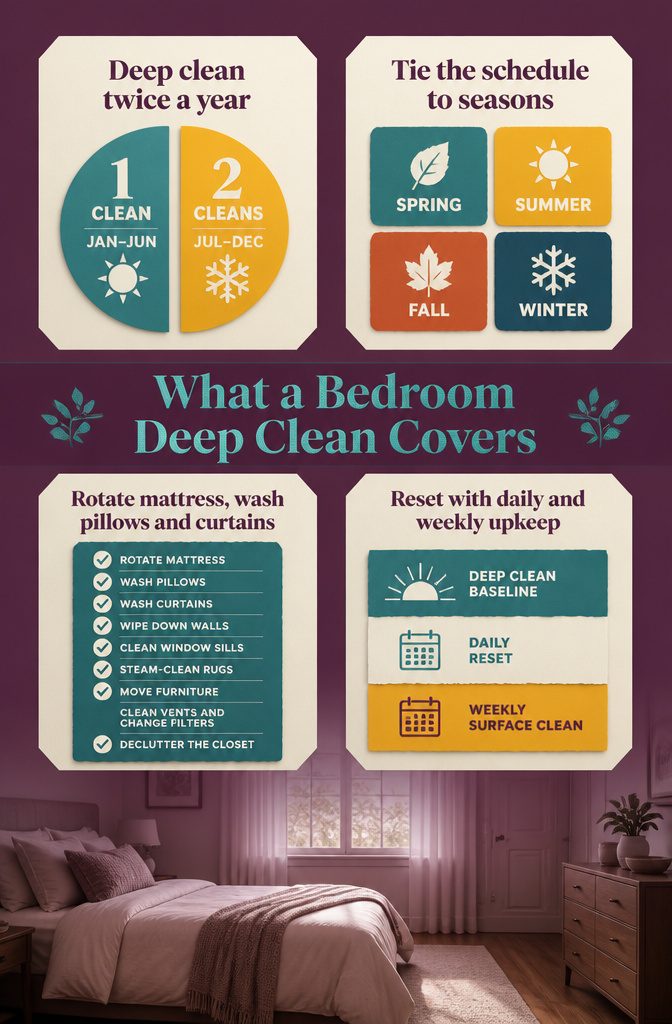
I typically start a bedroom cleaning schedule by running a full deep clean twice a year, then keeping up smaller habits in between.
The deep clean covers what daily tidying skips: rotating the mattress, washing pillows and curtains, wiping down walls, cleaning window sills, steam-cleaning rugs, moving furniture to reach the floor underneath, cleaning vents and changing filters, and decluttering the closet.
That initial pass gives you a clean baseline, and after that, a short daily reset and a weekly surface clean keep things from sliding back. I find it easier to tie the deep clean to seasons rather than arbitrary dates.
A fall and spring schedule works well because it lines up with when you’re already swapping out clothing, and a winter and summer schedule does the same thing on a different calendar.
Either way, the rhythm matters more than the exact month.
Frequently Asked Questions
How often should I clean my bedroom?
Clean your bedroom at least every other week with vacuuming and dusting, and keep up a short reset every few days to stay ahead of clutter.
Daily resets take around 5 minutes and cover high-traffic items, while weekly sessions add surface wiping and floor cleaning. Deep cleans covering mattress rotation, pillow washing, and other overlooked tasks happen twice a year.
Should I start with a bedroom deep clean?
Starting with a deep clean gives you a baseline, then daily and weekly habits keep the room from sliding back.
The deep clean covers what routine tidying skips: rotating the mattress, washing pillows and curtains, wiping walls, cleaning window sills, moving furniture to reach hidden floor areas, and clearing out the closet.
After that initial pass, short resets and weekly surface cleaning maintain the space.
What bedroom items should I clean seasonally?
Seasonal deep cleans cover mattresses, pillows, curtains, walls, window sills, rugs, areas under furniture, vents, filters, and closets.
Running this twice a year lines up well with clothing swaps in fall and spring or winter and summer. The rhythm matters more than the exact month.
How can I reduce dust and allergens in the bedroom?
Run a HEPA-filter vacuum weekly on carpet and upholstery, and monthly under the bed where allergens settle.
Wash sheets and pillowcases every week in the hottest water your machine offers, use allergen-proof covers on mattresses and pillows, and open windows once a week to let fresh air move through unless pollen counts are high.
Change air-purifier filters monthly if you run one, and replace HVAC filters on schedule.
How often should you wash your pillows?
Wash your pillows every 3 to 6 months if the care tag allows it. Memory foam and certain other fills have specific temperature or cycle limits that matter, so always follow the tag instructions.
How often should you wash your bedding and comforter?
Wash sheets and pillowcases at least once a week in hot water to stop bacteria and dust mites from building up.
If you use a top sheet, wash the comforter or duvet cover every 2 to 3 weeks; without one, wash it weekly. Blankets and throws typically need washing monthly.
What is the best order for cleaning a room?
Start by removing trash, dirty dishes, and laundry that doesn’t belong.
Next, put items back in their assigned spots and return anything that belongs in other rooms. Clean from high to low so dust falls to surfaces you haven’t wiped yet, then finish with the floor.
Where should I start if my room is very messy?
Start with ordinary trash and gather dirty dishes and laundry into their proper spots to clear visual noise fast.
Once those are gone, the actual clutter problem shrinks and you can sort what remains into items that belong in the room, items that go elsewhere, and anything worth donating or tossing.
Clearing a safe path through the room first makes the rest of the work faster.
Can I clean my room in 15 minutes?
A visible reset is possible in 15 minutes if you focus on high-traffic items that moved since the last pass.
That covers making the bed, clearing surfaces, and picking up what landed on the floor. A full clean with dusting and vacuuming takes longer, but the short reset keeps clutter from piling up between deeper sessions.